🧬 Science & Discovery | Dr. Elara Quinn
The recording arrived in our inbox at 3:00 AM—a jagged, breathless voice note titled simply mind motivation. It wasn’t a pep talk. It was a warning. The speaker, their voice echoing against what sounds like the tiled walls of a university lab, outlines a terrifying proposition: You aren’t lazy. You are chemically incapacitated. The “laziness” you feel is actually a structural failure in your brain’s ability to process effort, a condition the underground bio-hacking community is calling “Algorithmic Atrophy.”

The Myth of “The Grind”
For decades, we believed motivation was a moral virtue—a “muscle” you could strengthen with discipline. But as of February 2026, the scientific consensus has shattered that outdated model. The American Journal of Psychiatry’s latest paradigm shift identifies “disrupted neuroplasticity” as the root of modern apathy.
The voice in the audio file gets it right: we are treating a hardware problem with software solutions. We try to “think positive” (software) when our synaptic connections (hardware) have physically withered. The research confirms that psychiatric conditions and motivation deficits are now viewed as a loss of the brain’s capacity to rewire itself. You cannot “will” yourself into action any more than you can “will” a broken bone to knit.
The Enemy is “Frictionless”
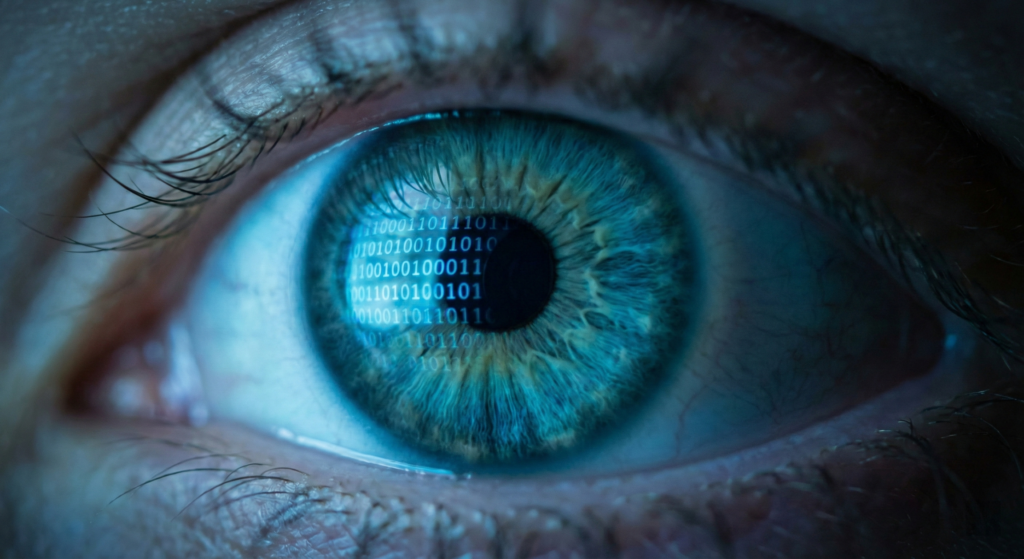
Why has our hardware failed? The culprit is likely in your pocket. We are living in the age of “Algorithmic Persuasion.” New studies from 2026 describe a phenomenon where AI-driven “nudges” operate below our conscious awareness, shaping our habits through personalized timing and micro-feedback loops.
This creates what researchers call the “Algorithmic Learner”—a brain rewired to prioritize fast, low-effort interactions over deep, “heuristic” work. Every time you scroll, accept a Netflix recommendation, or let an AI draft your email, you are removing friction.
- The Reality: The brain needs friction.
- The Data: A January 2026 Stanford study revealed that the release of dopamine is heavily influenced by the effort exerted to get the reward.
- The Consequence: When technology removes the effort, it removes the dopamine spike. We are drowning in convenience and starving for satisfaction.

The “Sunk Cost” biological Imperative
The audio recording mentions a concept that aligns perfectly with the “Sunk Cost” neuro-mechanism identified in recent animal studies. The researchers found that “raising the reward’s cost also triggered greater dopamine release,” providing a biochemical basis for why we value things we suffer for.
In an environment of infinite, low-cost digital rewards, our dopamine receptors downregulate. We become “motivationally numb.” The speaker in the clip argues that the only way to “turn the switch on” is to artificially reintroduce struggle into our lives—a “dopamine detox” that isn’t about silence, but about difficulty.
The 2026 Protocol: Return to “Heuristic” Living
So, how do we rebuild our neuroplasticity? The solution isn’t another productivity app. It’s about engaging in “Heuristic Tasks”—activities with no defined path, requiring experimentation and failure.

To reclaim your mind in 2026, you must reject the “nudge.”
- Seek Uncertainty: The brain’s threat system activates during uncertainty, which is taxing but necessary for growth.
- Embrace “Sunk Cost”: Choose hobbies where the learning curve is steep and frustrating (e.g., analog painting, coding from scratch). The frustration is the neuroplastic trigger.
- Reject Passive Consumption: Move from being an “Algorithmic Learner” to an active agent. If the app suggests it, ignore it.
The Big Picture
The voice note ends with a chilling thought: “If you don’t program your brain, the algorithm will.” The science of 2026 supports this. We are entering an era where “Intrinsic Motivation” is becoming a scarce resource, eroded by platforms designed to make us passive. The fight for your motivation is no longer just about productivity; it is a fight for your biological autonomy.

Audit your “Friction.” For the next 24 hours, identify every moment an algorithm saves you time (autofill, suggested responses, curated feeds). Choose one of those tasks and do it manually. Feel the resistance. That is your brain waking up.